Emergency Restoration — Water Damage Georgia.
Water damage Georgia homeowners face spreads fast. In Georgia's humid subtropical climate, mold begins colonizing within 24 hours of water intrusion. Licensed, IICRC-certified contractors are available for water damage Georgia emergencies across all Metro Atlanta counties — 24 hours a day, every day.
Water Damage Services
Across Metro Atlanta
From emergency extraction to full structural restoration — licensed contractors handle every stage of water damage Georgia recovery, available 24/7 across all Metro Atlanta counties.
Emergency Water Extraction
Rapid removal of standing water using industrial pumps and truck-mounted extraction units. Available 24/7 across all Metro Atlanta counties.
Structural Drying & Dehumidification
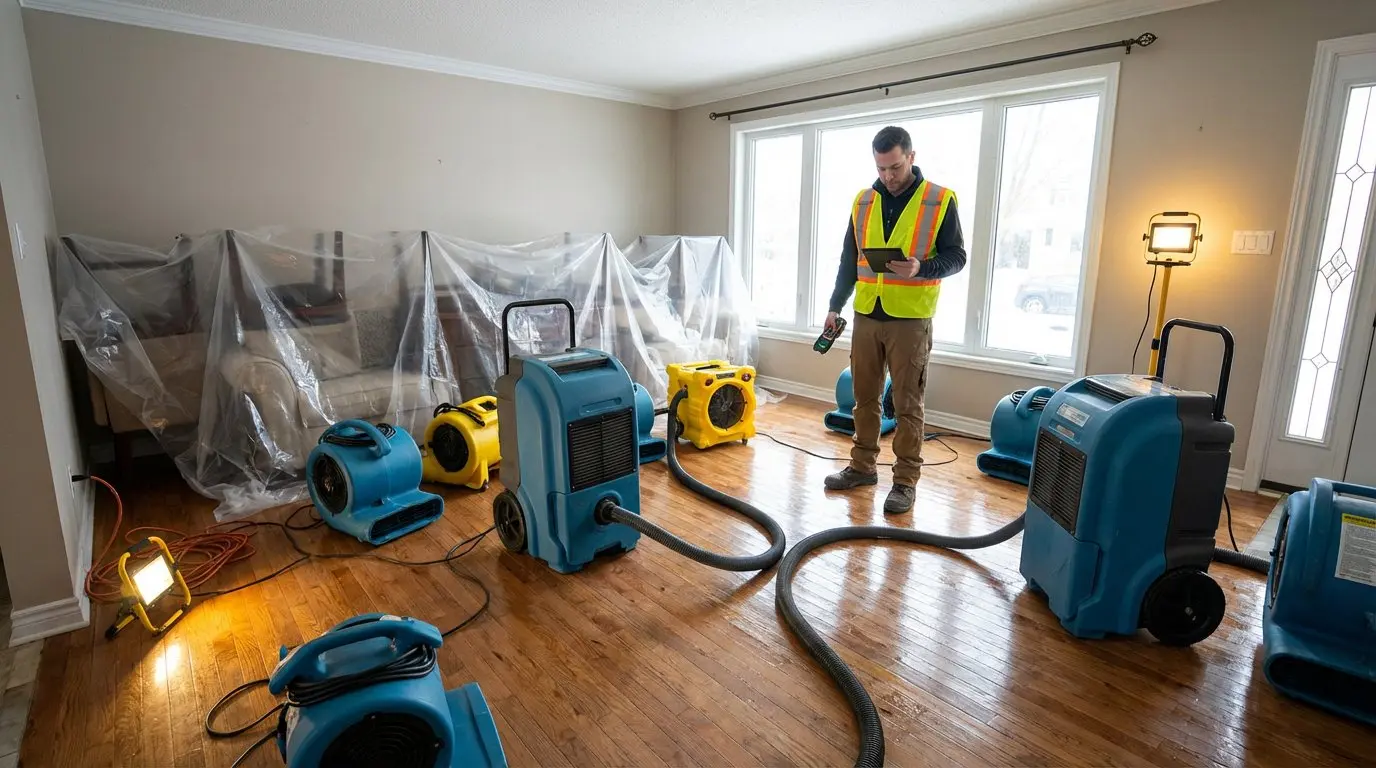
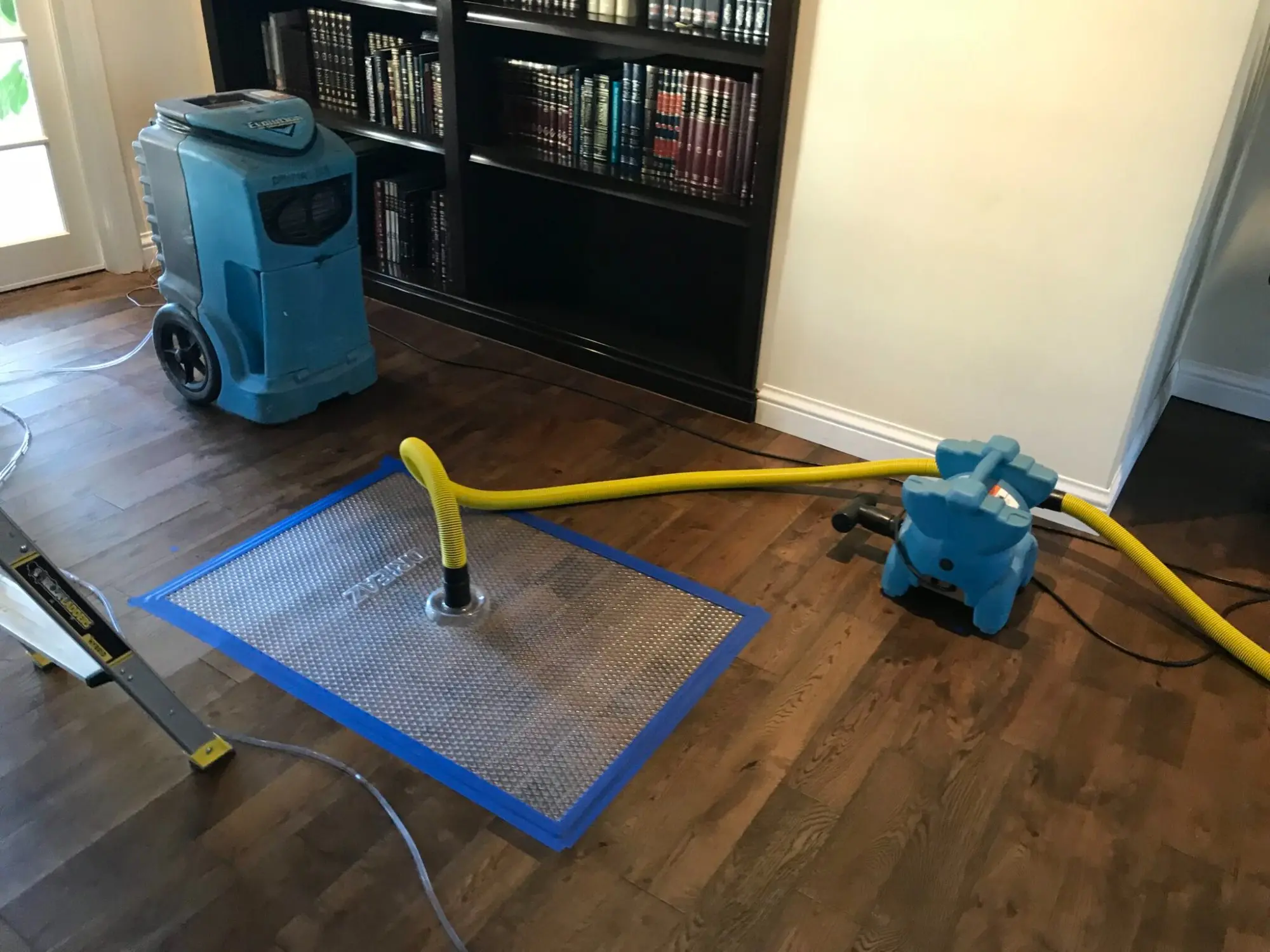
Commercial air movers and dehumidifiers eliminate hidden moisture from walls, subfloors and crawl spaces — critical in Georgia's subtropical humidity.
Flood Damage Cleanup
Storm surge, flash flooding and overland water events. Full extraction, sanitization and structural assessment after flood events across Georgia.
Burst Pipe Restoration
Georgia's occasional hard freezes cause pipe failures without warning. Rapid response before water migrates to multiple rooms and structural assemblies.
Sewage Backup Cleanup
Category 3 black water remediation. Full PPE, antimicrobial treatment and thorough sanitization to restore safe, habitable conditions.
Mold Prevention & Remediation
Georgia's 80%+ summer humidity means mold colonizes within 24-48 hours. Early intervention prevents costly long-term structural and health consequences.
Restoration in
Action
Licensed contractors using IICRC-standard equipment across Metro Atlanta residential and commercial properties.


4 Steps to
Full Restoration
Call (844) 817-0007
24/7 live response. A contractor in your Metro Atlanta area is identified immediately for emergency dispatch.
On-Site Assessment
Thermal imaging and moisture detection to map the full extent of damage — visible and hidden within walls and subfloors.
Extraction & Drying
Industrial water removal and structural drying calibrated for Georgia's elevated humidity environment.
Full Restoration
Structural repairs, reconstruction and insurance documentation — property returned to pre-loss condition.
Water Damage
Doesn't Wait.
Every hour increases structural damage and mold risk in Georgia's climate. Licensed contractors are standing by now.
📞 (844) 817-0007Licensed contractors · Available 24 hours a day · All Metro Atlanta Counties
All Metro Atlanta
Counties & Cities
Licensed water damage contractors available across Cobb, Fulton, Gwinnett and Cherokee Counties — and surrounding Georgia communities.
Water Damage Restoration
Services in Georgia
Why Georgia Properties Are Particularly Vulnerable
Georgia's humid subtropical climate creates some of the most challenging conditions for water damage restoration in the United States. Metro Atlanta's combination of heavy spring and summer thunderstorms, occasional winter pipe-freeze events, and year-round relative humidity above 70% means water intrusion escalates faster than in drier climates. Mold can begin colonizing within 24 to 48 hours of a water event — making immediate professional response a critical priority.
The red clay soil common throughout Cobb, Cherokee, and Fulton Counties does not absorb surface water the way sandy soils do, directing runoff directly against foundations and crawl spaces during heavy rain events. Many Metro Atlanta subdivisions built in the 1980s and 1990s have aging plumbing infrastructure approaching 40 years of service life — galvanized pipes, aging water heaters, and deteriorating supply lines that can fail without warning.
Water Damage Classification — IICRC S500 Standard
Contractors follow the IICRC S500 Standard, the industry-recognized framework for water damage assessment and remediation. Contamination is classified into three categories: Category 1 (clean water from supply lines, rain, or ice melt), Category 2 (grey water with biological or chemical contaminants from dishwashers, washing machines, or sinks), and Category 3 (black water from sewage backups or floodwater — requires full hazmat protocols and PPE). Damage severity is assessed on four classes: Class 1 (minimal absorption, limited to part of one room), Class 2 (significant moisture in walls and carpeting), Class 3 (saturation of walls, ceilings, insulation and subfloors), and Class 4 (specialty materials such as hardwood, concrete, and stone requiring extended low-grain dehumidification). In Georgia's subtropical climate, an untreated Class 1 or 2 event can escalate to Class 3 within 24 hours — which is why immediate professional response is non-negotiable. All contractors available through (844) 817-0007 are trained and certified to IICRC S500 standards.
What Licensed Contractors Handle
For water damage Georgia property owners need resolved fast, contractors available through (844) 817-0007 handle the full spectrum of water damage scenarios across Marietta, Alpharetta, Roswell, Duluth, Kennesaw and all Metro Atlanta communities — from emergency extraction and structural drying through mold remediation and full property reconstruction. All contractors work with standard homeowners insurance policies and provide documentation for claims.
The Importance of Immediate Response
In Georgia's climate, the window between water intrusion and mold colonization is narrow. Professional-grade dehumidifiers and air movers achieve drying rates simply not possible with household equipment. Each additional hour allows water to migrate further into wall cavities, subfloor assemblies, and insulation — dramatically increasing both repair costs and health risks. For any water damage Georgia emergency, call (844) 817-0007 immediately.
Frequently Asked
Questions
Licensed contractors in the Metro Atlanta area are available 24/7. Call (844) 817-0007 to connect with a local contractor for immediate assessment. Response time varies by location and time of day.
Most standard homeowners insurance in Georgia covers sudden and accidental water damage — burst pipes, appliance failures, storm-related roof leaks. Gradual leaks and natural flood events typically require separate coverage. Contractors can help document damage for claims.
Shut off the water source if safe. Turn off electricity in affected areas. Move valuables above the water line. Then call (844) 817-0007 immediately. Do not use household fans — they are insufficient and can spread contamination.
Water extraction takes hours. Structural drying requires 3-5 days with commercial equipment. Georgia's high humidity extends drying time without professional dehumidification. Full reconstruction — drywall, flooring, paint — ranges from days to weeks depending on severity.
Yes — Georgia's humid subtropical climate is one of the highest-risk environments for post-water-damage mold growth. Mold can colonize within 24-48 hours, particularly during Atlanta's hot summers. Professional drying is the only reliable prevention method.
Cobb County (Marietta, Kennesaw, Smyrna, Acworth, Woodstock), Fulton North (Alpharetta, Roswell, Sandy Springs, Johns Creek, Milton), Gwinnett (Duluth, Lawrenceville, Norcross, Peachtree Corners), Cherokee (Canton, Woodstock, Ball Ground) and surrounding communities. Call (844) 817-0007 to confirm coverage in your area.
Emergency Water Damage Response Across Metro Atlanta
Metro Atlanta's 6.2 million residents live in housing built across every decade from the 1950s to the 2020s — each era carrying distinct water damage vulnerabilities. Polybutylene piping in 1980s–1990s homes fails without warning, creating hidden wall moisture. CPVC connections in 2000s construction become brittle after 15–20 years. Original water heaters from any era past their 8–12 year expected lifespan are ticking time bombs. When these components fail in Georgia's 75%+ summer humidity, the damage compounds exponentially with every hour of delay.
Licensed contractors respond to water damage emergencies across all Metro Atlanta counties — Cobb County (Marietta, Kennesaw, Smyrna, East Cobb), Fulton County (Atlanta, Roswell, Sandy Springs, Alpharetta), Gwinnett County (Buford, Duluth, Lawrenceville), and Cherokee County (Canton, Woodstock, Holly Springs). For flood damage from storms or natural water events, the same contractors handle extraction, drying and restoration through a single call to (844) 817-0007.
Mold Remediation Services
Water damage left unaddressed in Georgia's humid climate produces mold colonization within 24–48 hours. If mold has established after a water event, IICRC-certified contractors handle both restoration and remediation through a single call to (844) 817-0007. Professional mold remediation across Georgia includes inspection, containment, removal and clearance testing. For black mold (Stachybotrys chartarum), specialized containment protocols are required. Professional mold inspection with air and surface sampling identifies species, concentration and contamination boundaries before remediation begins.
DeKalb County Water Damage & Mold Services
DeKalb County's 764,000 residents across Decatur, Dunwoody, Brookhaven and Tucker are served 24/7 for both water damage restoration and mold remediation. Coverage includes Decatur, Dunwoody, Brookhaven and Tucker for water damage, and Decatur, Dunwoody and Brookhaven for mold. Call (844) 817-0007.
Expanded Gwinnett County Coverage
Water damage restoration now covers all major Gwinnett County cities: Duluth, Lawrenceville, Norcross, Suwanee, Peachtree Corners and Snellville. For North Fulton, contractors serve Johns Creek, Milton and South Fulton. Johns Creek mold remediation and South Fulton mold remediation are also available. Call (844) 817-0007.
Ready to Connect
With a Contractor?
Licensed and insured · Available 24 hours · All Metro Atlanta Counties
📞 Call immediately (844) 817-0007