HomeGeorgiaCobb CountySmyrna
Water damage mitigation licensed contractor Smyrna Georgia Vinings Mableton
⚡ 24/7 Emergency Service

Smyrna, Georgia — Cobb CountyWater Damage
Restoration

Smyrna encompasses three communities with distinct water damage risk profiles: the mixed-era Smyrna core, elevation-driven Vinings near the Chattahoochee, and Mableton's pre-1975 galvanized steel and cast iron systems. Licensed contractors 24/7.

Last updated: March 2026
📞Call Now — Free(844) 817-0007
Licensed Contractors Insurance Assistance 60-Min Response

← All Cobb County Cities

⚠ Why Act Now

Mixed construction eras: Smyrna's housing spans 1960s cast iron, 1975–1995 polybutylene, and post-2000 — each with different failure patterns.

Vinings topography: Elevation changes concentrate storm runoff into lower-lying neighborhoods near Paces Ferry Road.

Mableton pre-1975: Older Mableton housing stock has galvanized steel supply lines and cast iron drains approaching end-of-life.

Cumberland density: Truist Park mixed-use zone creates shared-infrastructure moisture migration risk for adjacent residential.

📞 (844) 817-0007
Available 24/7 — Nights, Weekends & Holidays
Licensed & Insured Contractors
Insurance Claim Assistance
IICRC S500 Standards
Smyrna Risk Profile

Smyrna, Vinings & Mableton — Three Distinct Risk Profiles

Unlike more uniformly-era'd Cobb County suburbs, the Smyrna area encompasses three communities with significantly different construction periods, topographies, and water damage risk patterns — each requiring a different diagnostic approach.

01
Smyrna Core — Mixed Era Challenge

Smyrna's core neighborhoods span the 1960s through 1990s — containing a mix of cast iron drain systems, early copper plumbing, and polybutylene supply lines installed during the 1975–1995 window. Unlike Kennesaw (predominantly one era) or Marietta's East Cobb (peak PB concentration), Smyrna properties require a careful inspection to identify which pipe system is present before an accurate mitigation strategy can be determined. Mixing up a PB remediation approach with a cast iron drain issue leads to incomplete repairs.

Multi-Era Pipe Mix
02
Vinings — Topographic Risk

Vinings sits on a series of ridges and valleys immediately west of the Chattahoochee River — unusually hilly terrain for Cobb County. Significant elevation changes mean storm runoff concentrates rapidly in valley communities. Properties below Paces Ferry Road and in the lower Vinings Village corridors are especially exposed during events exceeding one inch per hour. Rottenwood Creek and its tributaries drain these ridges into the Chattahoochee; when the river is simultaneously elevated during a storm event, these creeks back up, compounding the risk.

Elevation-Driven Runoff
03
Mableton — Pre-1975 Infrastructure

Mableton — recently incorporated but historically part of unincorporated Cobb adjacent to Smyrna — has a significant 1950s–1975 housing stock. This era predates polybutylene but features galvanized steel supply lines and cast iron drain systems. Galvanized steel corrodes from the inside out over 40–70 years, reducing flow gradually before eventual internal collapse. Cast iron drains develop cracks and root intrusions. Both systems reach end-of-life failure in the 50–70 year range — which describes a large portion of Mableton's current housing stock.

Pre-1975 Pipe End-of-Life
04
Cumberland / Truist Park Zone

The Cumberland commercial district and Truist Park development corridor brought high-density construction adjacent to existing Smyrna residential neighborhoods. Shared infrastructure in this zone — mixed-use buildings, parking decks, stadium drainage systems — creates moisture migration risk for adjacent properties during heavy rain events. New stormwater infrastructure meeting older systems at capacity boundaries also creates localized flooding that affects residential streets in ways that appear random but are structurally predictable.

Urban Infrastructure Mismatch
58K
Smyrna Population
~350
Monthly Searches
3
Distinct Risk Zones
24/7
Dispatch Available
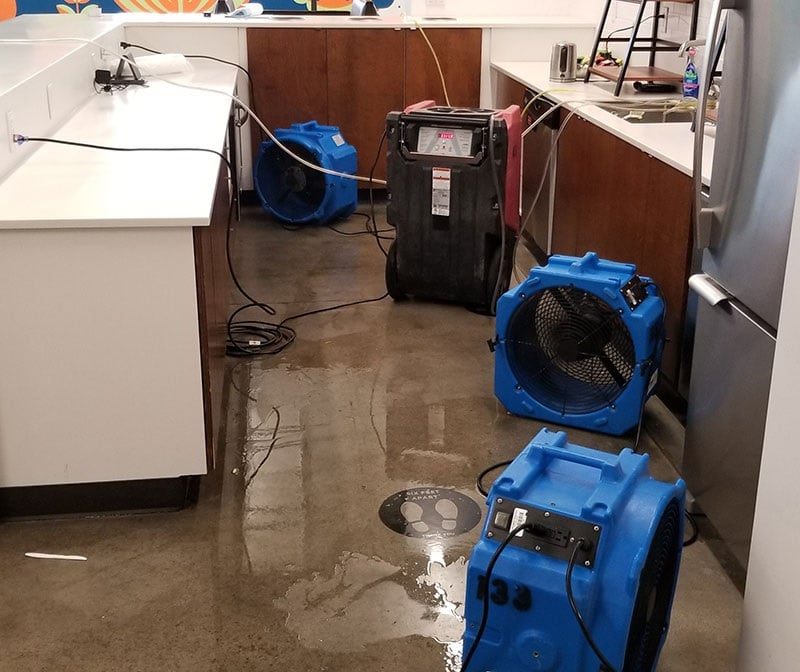
Water damage mitigation equipment at Smyrna Georgia Vinings area home
All persons depicted are actors or models.
Smyrna Context

Why Smyrna's Urban-Suburban Mix Creates Unique Water Damage Exposure

Smyrna occupies a unique position in Cobb County — dense enough to have urban-style infrastructure complexity, but primarily composed of single-family homes without the building management infrastructure of a high-rise to handle water events. The result is that residents bear the response burden directly, without a property manager or facilities team to intervene.

The rapid development of the Cumberland corridor and Truist Park area introduced new high-density construction immediately adjacent to existing 1960s–1990s neighborhoods. Where new stormwater infrastructure meets older systems, capacity mismatches during heavy storms can cause backflow and localized flooding that homeowners often attribute to unusual weather, when in fact the events recur with similar storm intensities.

For Vinings specifically, the Chattahoochee River proximity matters in ways that aren't obvious. Vinings itself sits above the floodplain, but the creek systems draining into the river — including Rottenwood Creek — can back up during events where storm drain systems and the river are simultaneously elevated. This compound event produces flooding in valley communities that doesn't fit the typical "heavy rain" explanation.

Call (844) 817-0007 for licensed Smyrna contractors, 24/7. Also: Marietta | Kennesaw | All Cobb County.

Coverage

Smyrna, Vinings & Mableton Coverage

All Areas Served

  • Smyrna Village
  • Vinings
  • Mableton
  • Cumberland District
  • Truist Park Area
  • Spring Road Corridor
  • Paces Ferry Road
  • Atlanta Road
  • Oakdale Road
  • South Cobb Drive
  • Rottenwood Creek Corridor
  • Lower Vinings Village
Step-by-Step Process

What Happens After You Call

Understanding the full restoration process helps you ask the right questions and know what to expect. Licensed contractors follow IICRC S500 protocol.

1

Emergency Dispatch — Immediate

Your call to (844) 817-0007 connects you with live dispatch 24/7. Address, damage type, and severity are assessed to identify the nearest available licensed contractor. You are never sent to voicemail.

2

On-Site Inspection & Moisture Mapping — Within 60 Min

Contractor arrives with moisture meters and thermal imaging equipment. The full moisture footprint is mapped — not just visible damage. This step is critical because water migrates behind walls and under flooring far beyond the visible damage area. Documentation begins immediately for insurance purposes.

3

Water Extraction — Same Visit

Industrial truck-mount or portable extraction equipment removes standing water from all surfaces — carpet, hardwood, tile, and concrete slab. The goal is removing bulk water before structural drying begins. Speed here determines drying time and mold risk.

4

Structural Drying — 3 to 5 Days Typical

Industrial dehumidifiers and high-velocity air movers are placed to achieve IICRC drying goals. Daily moisture readings are documented. Drying time varies by material: carpet dries faster than hardwood; drywall faster than concrete slab. Drying is not complete until readings reach pre-loss levels throughout the affected structure.

5

Insurance Documentation & Scope of Loss

A complete documentation package — moisture readings, thermal imaging reports, photo documentation, and scope of loss — is prepared for submission to your homeowners insurance carrier. Licensed contractors are experienced with the documentation requirements of major Georgia insurers including State Farm, Allstate, USAA, and Travelers.

6

Restoration & Rebuild — Timeline Varies

Once drying is confirmed and insurance scope approved, restoration begins — replacing drywall, flooring, insulation, and any structural elements affected. The same contractor network handles both mitigation and restoration, eliminating handoff delays.

Common Questions

Frequently Asked Questions

What makes Vinings different from other Smyrna-area neighborhoods for water damage?
Vinings has significant elevation changes compared to the surrounding Cobb County terrain — unusual for Metro Atlanta. Storm runoff concentrates rapidly in valley areas. Properties below Paces Ferry Road and in lower Vinings Village corridors are particularly exposed during heavy rain events. Additionally, Rottenwood Creek draining the ridges toward the Chattahoochee River can back up when the river is simultaneously elevated, creating compound flooding in these valley communities.
My Mableton home was built in the 1960s — what specific pipe risks apply?
Mableton homes from the 1950s–1970s typically have galvanized steel supply lines and cast iron drain systems. Galvanized steel corrodes from the inside out over 40–70 years, developing internal rust build-up that reduces flow and eventually causes pipe collapse. Cast iron drains crack and develop root intrusions in the same timeframe. If your home is approaching or past 50 years old and hasn't had a plumbing inspection, both systems warrant review.
Is Mableton considered part of the Smyrna service area?
Yes. The contractor dispatch network covers the full Smyrna-Mableton area, including the recently incorporated City of Mableton and adjacent unincorporated areas. Call (844) 817-0007 to confirm coverage for your specific address.
Does the Cumberland District / Truist Park area affect surrounding residential properties?
High-density construction in the Cumberland-Truist Park corridor can create drainage capacity issues during heavy storms that affect adjacent residential areas. If your Smyrna property is near this zone and experiences recurring flooding or water intrusion after storm events, a professional assessment can determine whether infrastructure drainage patterns are contributing.
Can contractors handle water damage in Smyrna condos or townhomes where the source is in another unit?
Yes. When water damage migrates from an adjacent unit — a common situation in Smyrna's townhome and condo developments — licensed contractors provide documentation that establishes the moisture source, migration path, and scope of damage in your property. This documentation supports both your homeowners or HO-6 insurance claim and potential subrogation proceedings against the responsible party.
How fast can contractors reach Vinings?
Vinings is within the Smyrna-Cobb County dispatch zone. Target response time is under 60 minutes for most Vinings addresses. Call (844) 817-0007 at any hour — including during active storm events when response is most critical.
What does "structural drying" mean for a Smyrna home with mixed construction materials?
Structural drying uses industrial dehumidifiers and high-velocity air movers to remove moisture from building materials until they reach pre-loss equilibrium. For Smyrna homes with mixed-era construction, drying targets vary by material: hardwood floors require different treatment than concrete slab, drywall dries at a different rate than wood framing, and older construction materials may need extended drying timelines. Daily moisture readings document progress toward IICRC S500 drying goals.

Smyrna's Chattahoochee proximity elevates humidity, compressing the mold timeline. If mold has established, Cobb County mold remediation is available through (844) 817-0007 — the same contractors who handle water damage. If mold has established, mold remediation in Smyrna is available through (844) 817-0007.

Adjacent Vinings shares Smyrna's Chattahoochee corridor humidity and mixed-era housing risks.

Don't Wait — Every Hour Counts

Water damage worsens fast. Mold can start growing within 24–48 hours in Georgia's climate. Call now for immediate help.

📞Free — Available Now(844) 817-0007

Ready to Connect
With a Contractor?

Licensed and insured · Available 24 hours · All Metro Atlanta Counties

📞 Call immediately(844) 817-0007